Hidden details
A Nightmare on Elm Street (1984): hidden details you probably missed
Heads up: some of these details touch on plot points.
A Nightmare on Elm Street (1984) permanently changed horror by turning something nobody can avoid — sleep — into the hunting ground of one of the genre's most recognizable villains. Wes Craven combined the 1980s slasher formula with surrealism, childhood fears, and dream logic that made it increasingly difficult to tell when Nancy Thompson was awake and when Freddy had already entered her mind.
A Nightmare on Elm Street (1984) permanently changed horror by turning something nobody can avoid — sleep — into the hunting ground of one of the genre's most recognizable villains. Wes Craven combined the 1980s slasher formula with surrealism, childhood fears, and dream logic that made it increasingly difficult to tell when Nancy Thompson was awake and when Freddy had already entered her mind.
Detail 1
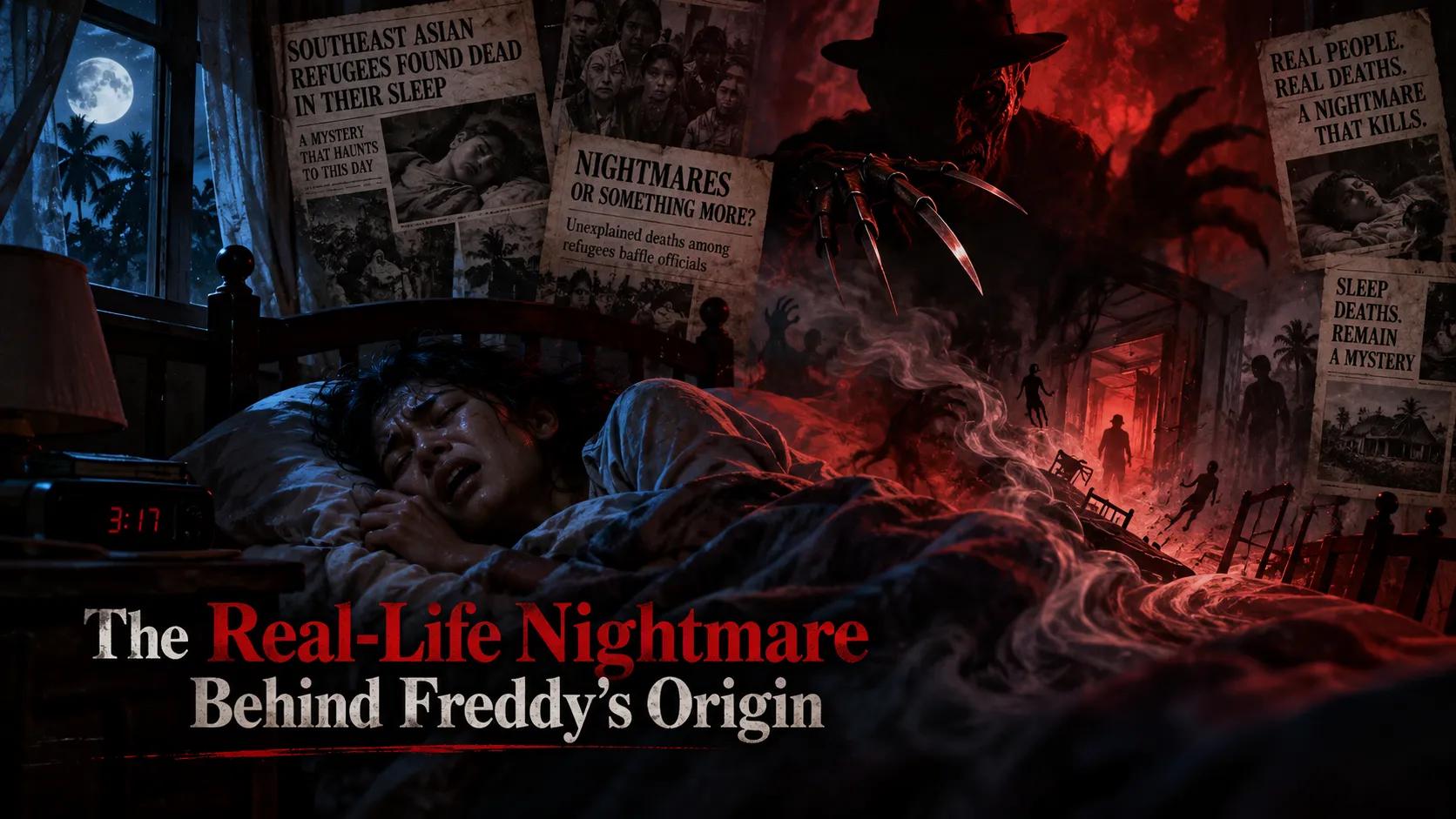
The story was inspired by mysterious real-life deaths during sleep: Freddy's basic concept has a disturbing connection to reality. Craven had read Los Angeles Times reports about Southeast Asian refugees, particularly members of Hmong communities, experiencing terrifying nightmares and, in some cases, inexplicably dying during sleep. Craven transformed the mystery into a terrifying question: what if the nightmare itself was actually responsible for killing the sleeper?
Detail 2
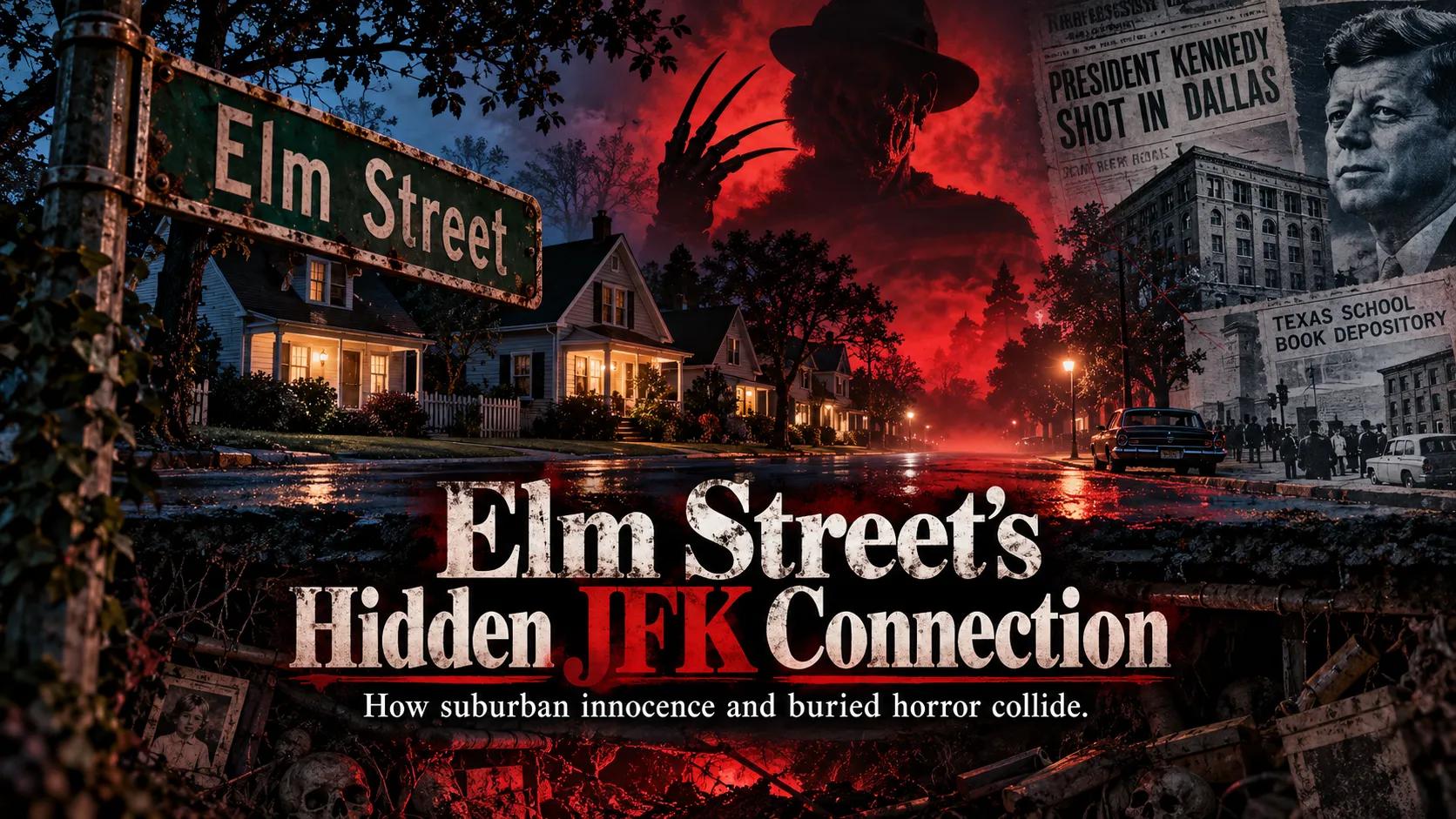
Elm Street carries a hidden JFK connection: The street name was not chosen simply because it sounded suitably suburban. Craven explained that Elm Street ran past the Texas School Book Depository associated with the assassination of John F. Kennedy. To him, it represented a location where a certain image of American innocence had ended. That idea perfectly matches the movie's central contrast between safe-looking suburban homes and the horrific history buried beneath them.
Detail 3
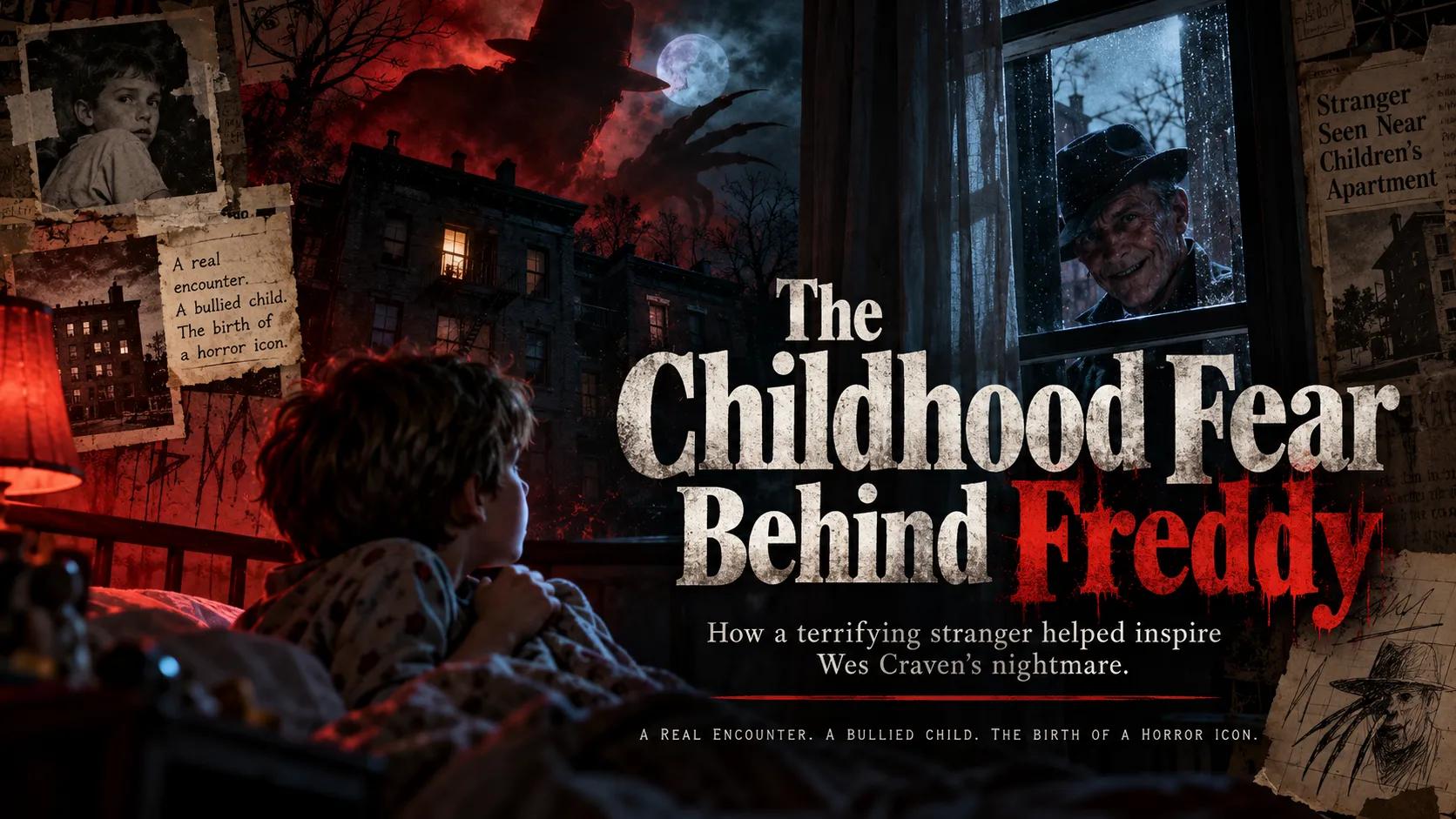
Freddy was partly inspired by a stranger who terrified young Wes Craven: When Craven was in sixth grade, he saw a strange man outside his apartment window. The man realized that the frightened boy was watching him, stared back, and appeared to enjoy prolonging the encounter. Craven later described the experience as the origin of the idea of an adult who deliberately enjoys frightening a child. The name Fred also came from a boy who had bullied Craven when he was younger.
Detail 4
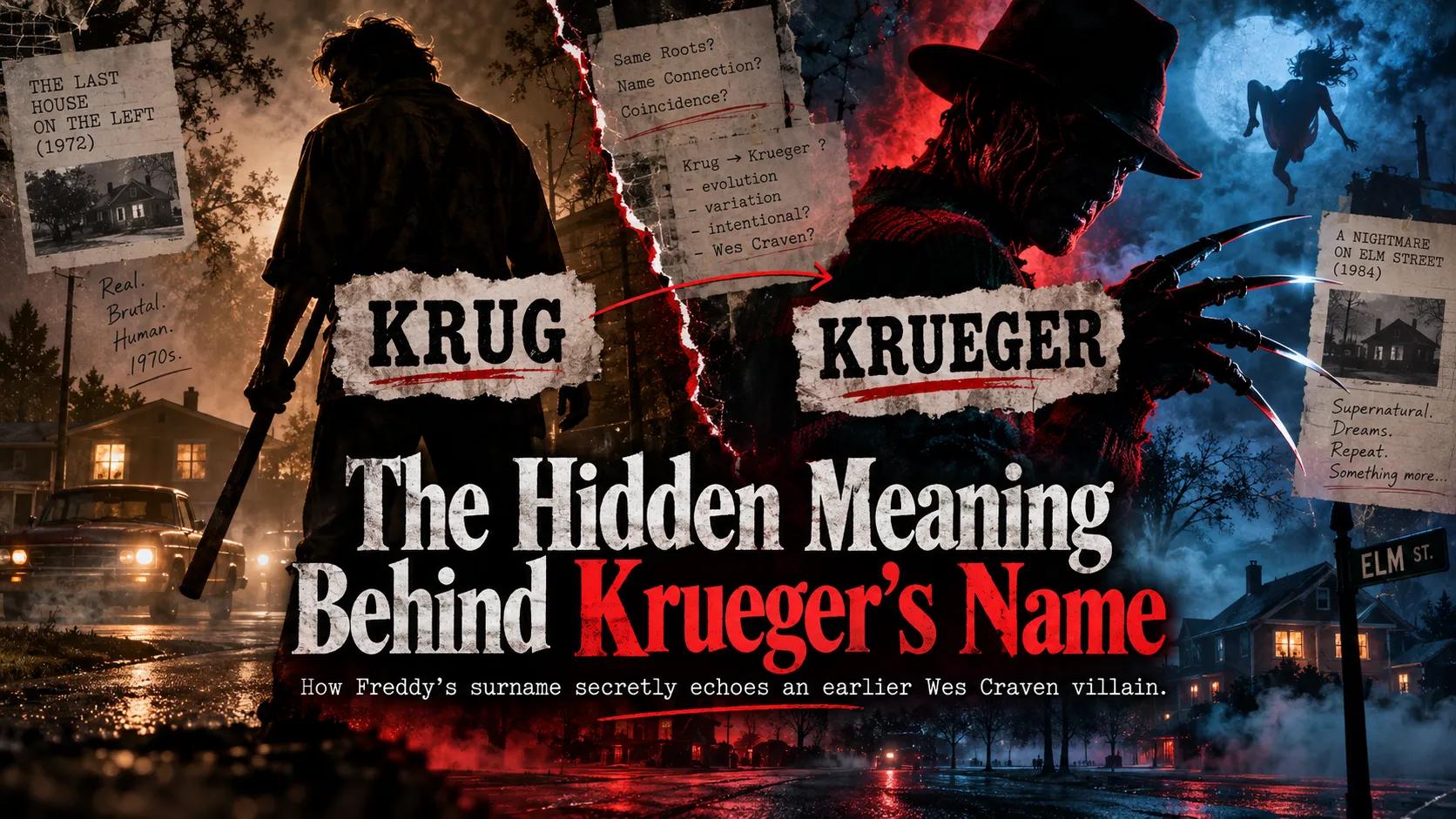
Krueger's surname hides a reference to another Wes Craven villain: Freddy's name contains a small piece of Craven's earlier filmography. The director explained that Krueger was partly derived from Krug, the sadistic villain from his controversial 1972 debut The Last House on the Left. Freddy therefore carries a subtle connection to an earlier Craven monster, linking the supernatural dream killer to the brutal human villains that defined the filmmaker's first period.
Detail 5
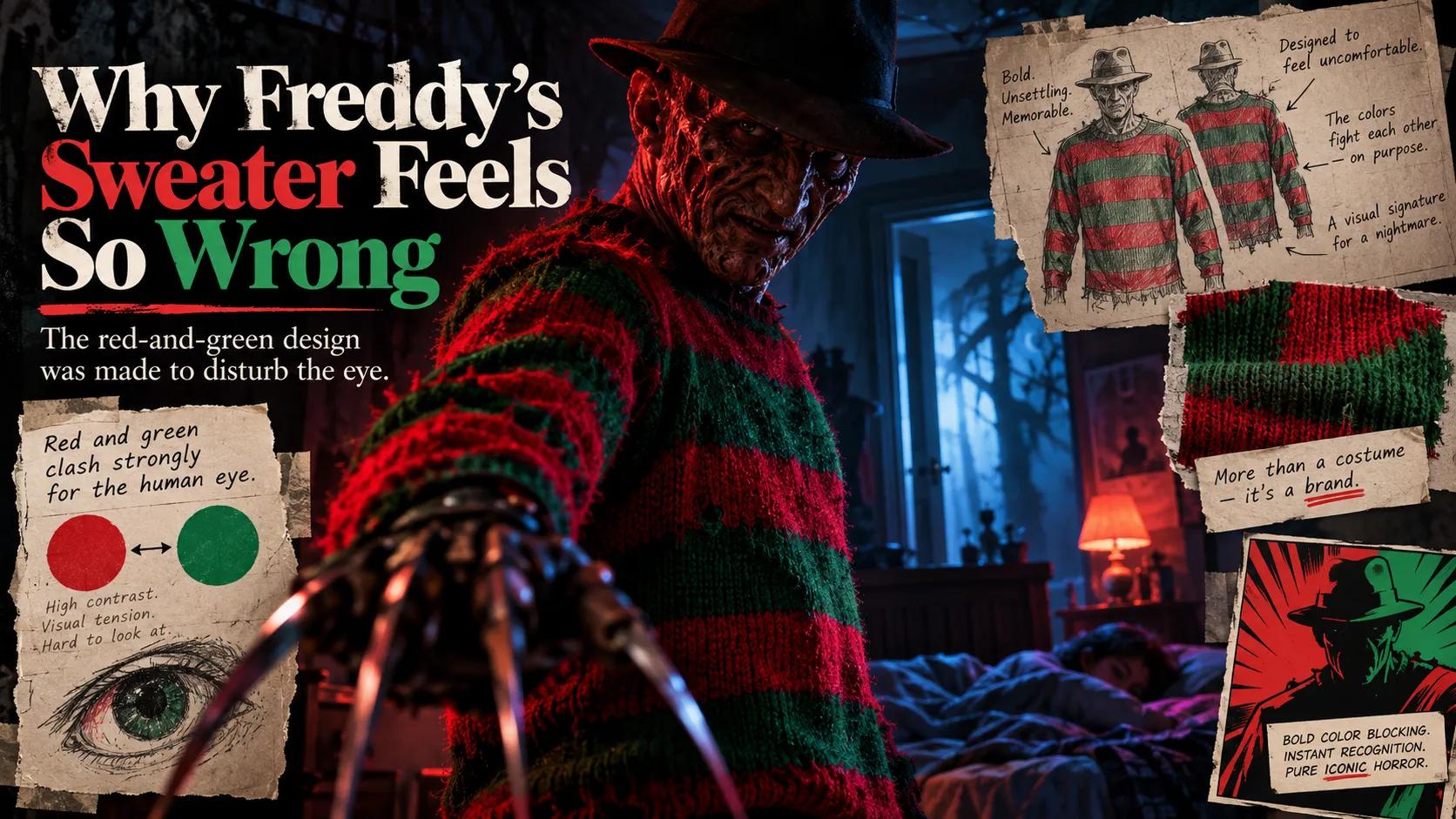
Freddy's red-and-green sweater was meant to be visually uncomfortable: Freddy did not originally wear the famous color combination. Craven changed the costume after encountering information describing red and green as particularly clashing colors for the human retina when placed together. His thinking was also influenced by Plastic Man, whose recognizable colors remained visible when the comic-book character changed shape. Freddy's sweater therefore functions as both branding and subtle visual irritation.
Detail 6
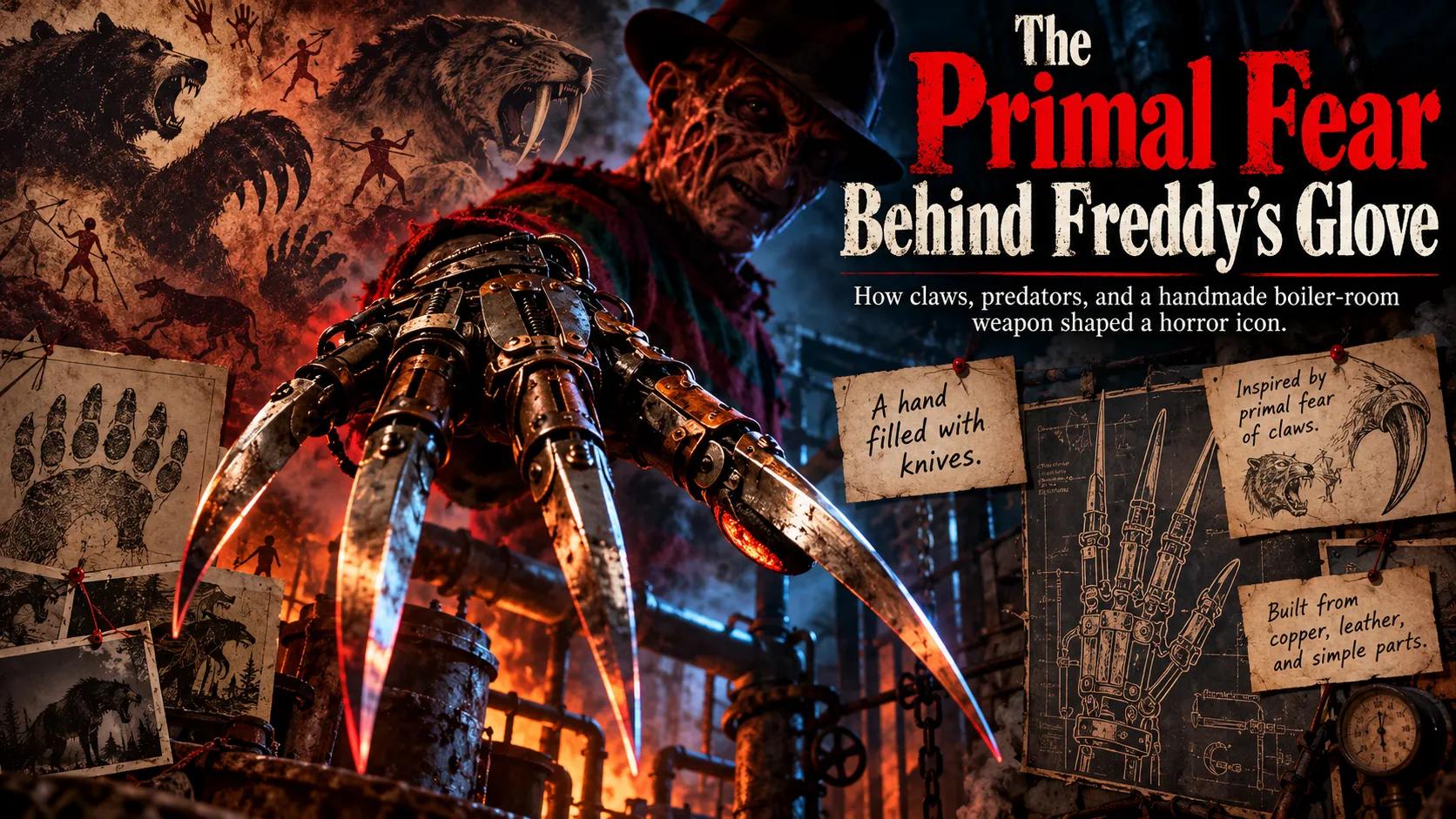
The glove comes from humanity's primal fear of claws: Craven wanted something more psychologically basic than another slasher knife. He thought about prehistoric predators such as bears and saber-toothed cats and the ancient human fear of encountering creatures armed with claws — essentially a hand filled with knives. Effects designer Jim Doyle then constructed the weapon from copper, leather, and simple components so that it looked like something Freddy could realistically have assembled inside a boiler room.
Detail 7
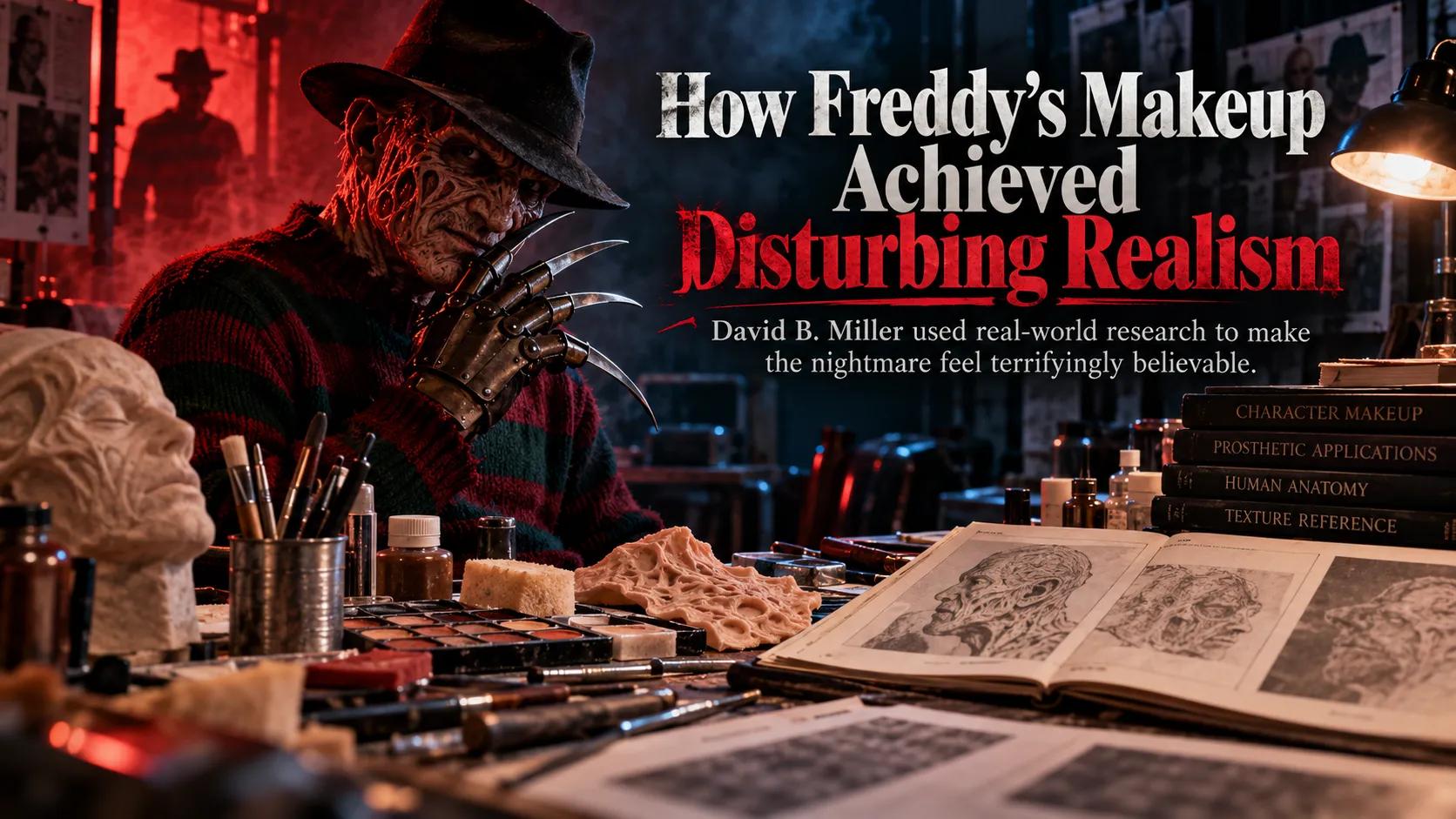
Freddy's burned face was researched using real medical photographs: Makeup artist David B. Miller did not rely solely on fantasy when designing Krueger. Robert Englund remembers Miller showing him large medical books containing photographs of actual burn victims while developing the prosthetics and skin textures. Craven wanted Freddy to look like someone who had genuinely died in a fire rather than a conventional rubber monster, which helps explain the disturbing physical realism of the original makeup.
Detail 8
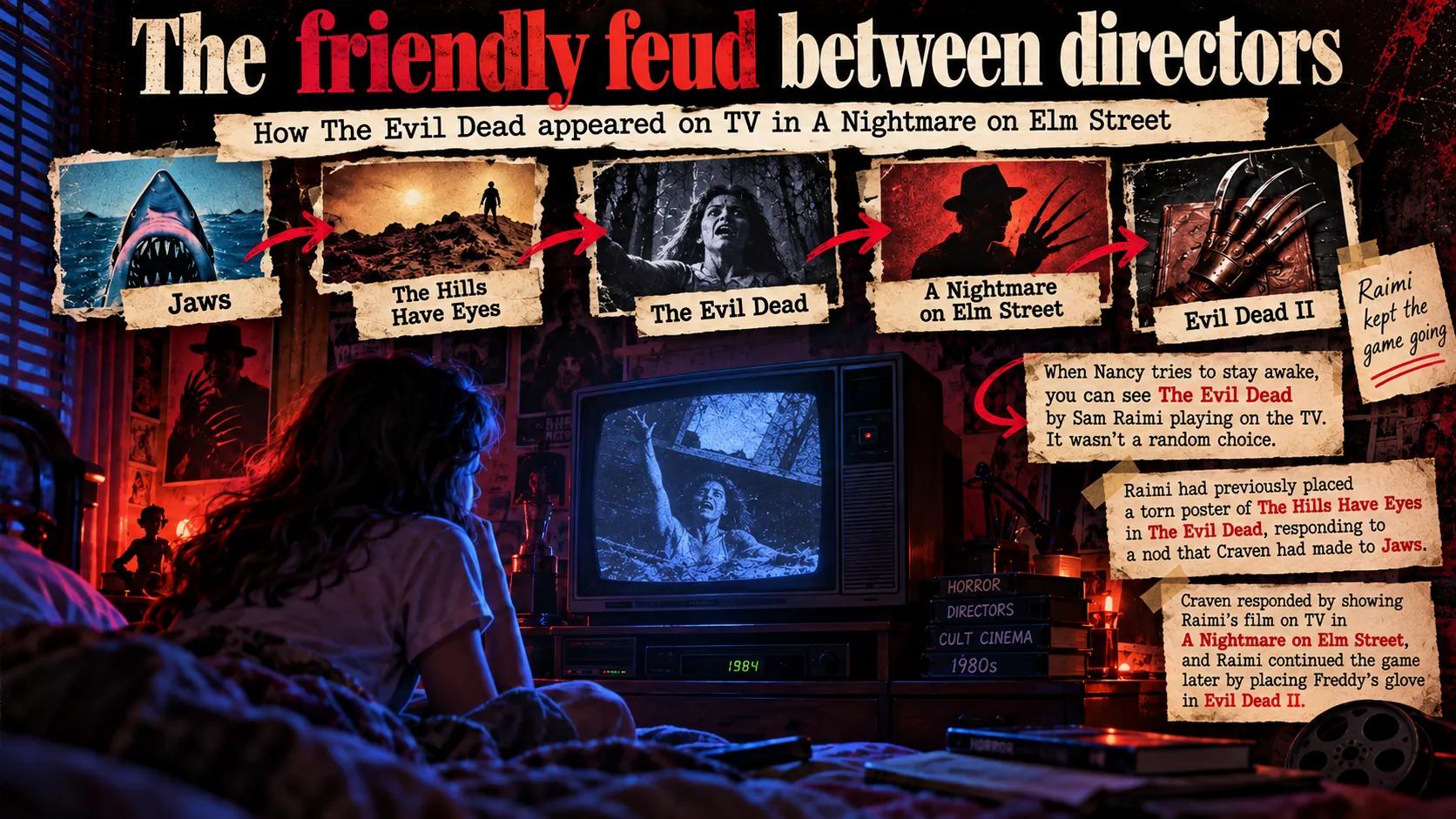
The Evil Dead on Nancy's television is part of a director-to-director joke: When Nancy desperately tries to stay awake, Sam Raimi's The Evil Dead plays on her television. This was a deliberate response to Raimi placing a torn The Hills Have Eyes poster in his own film, itself inspired by a Jaws reference Craven had previously used. Raimi eventually continued the playful exchange by hanging Freddy's glove in the background of Evil Dead II.
Detail 9
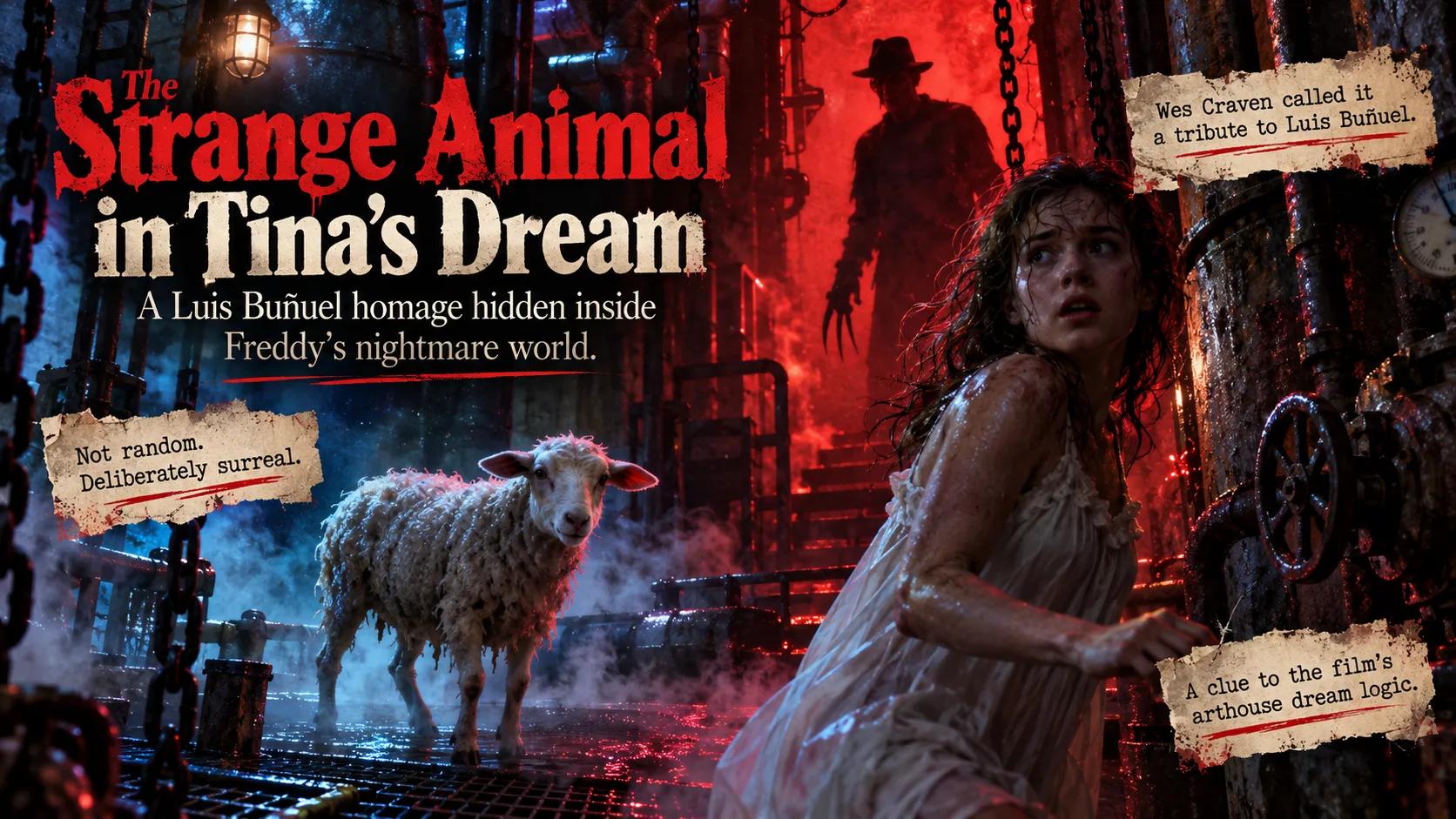
The strange animal in Tina's dream is a Luis Buñuel homage: One of the earliest dream sequences briefly shows an unexpected animal inside Freddy's industrial nightmare world. Fans have suggested numerous symbolic explanations for it, but Craven explained on the film's commentary that it was essentially a tribute to surrealist filmmaker Luis Buñuel. The shot reveals the arthouse influences underneath the movie's slasher surface and helps explain why its dream imagery often feels deliberately irrational.
Detail 10
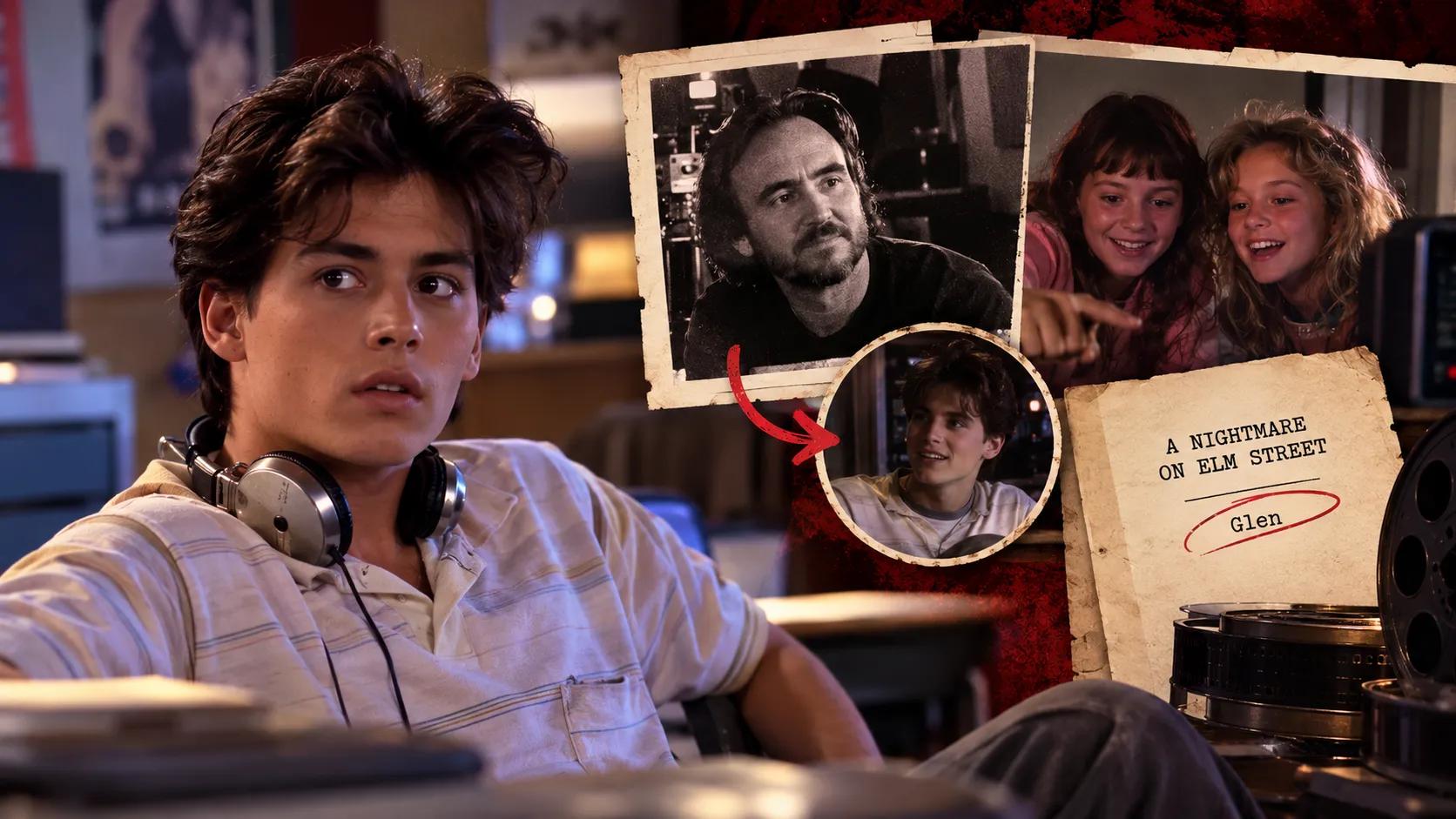
Johnny Depp's first movie role received an unlikely push from Craven's daughter: Johnny Depp was still primarily a musician when he auditioned for Glen, and his initial reading did not immediately impress Craven. The director's young daughter and her friend, however, reacted enthusiastically when they saw him. Their response helped change perceptions of the unknown actor, and Depp ultimately landed his first film role — accidentally beginning one of Hollywood's most recognizable careers inside a low-budget horror production.
Detail 11
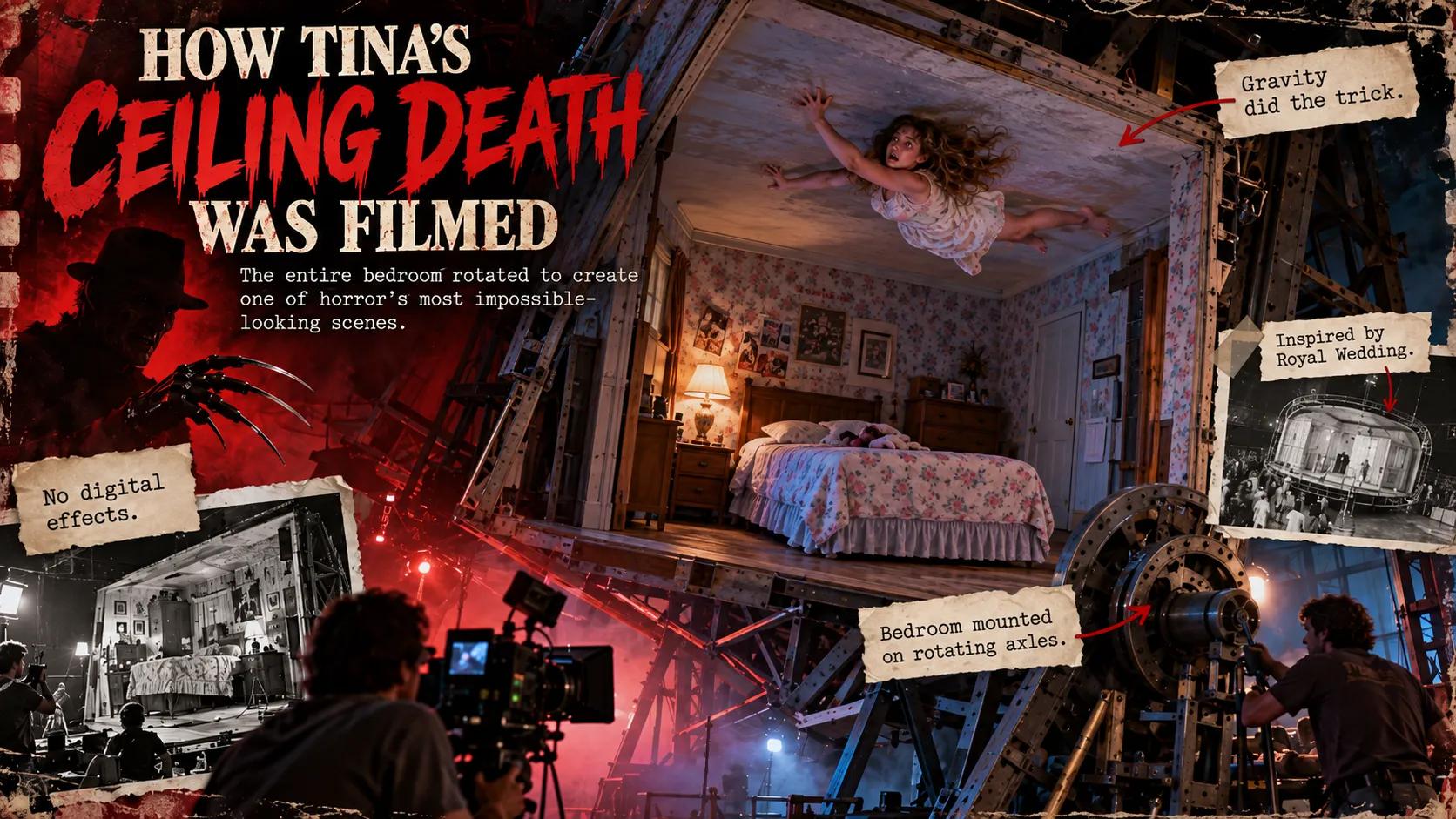
Tina's ceiling death was created by rotating the entire bedroom: When Tina appears to crawl across the walls and ceiling, Amanda Wyss was not being digitally manipulated. Mechanical-effects designer Jim Doyle constructed an enormous bedroom mounted on rotating axles. Craven had been inspired by Fred Astaire's gravity-defying room in Royal Wedding. By rotating the environment rather than the actress, normal gravity created one of the most visually impossible-looking deaths in 1980s horror.
Detail 12
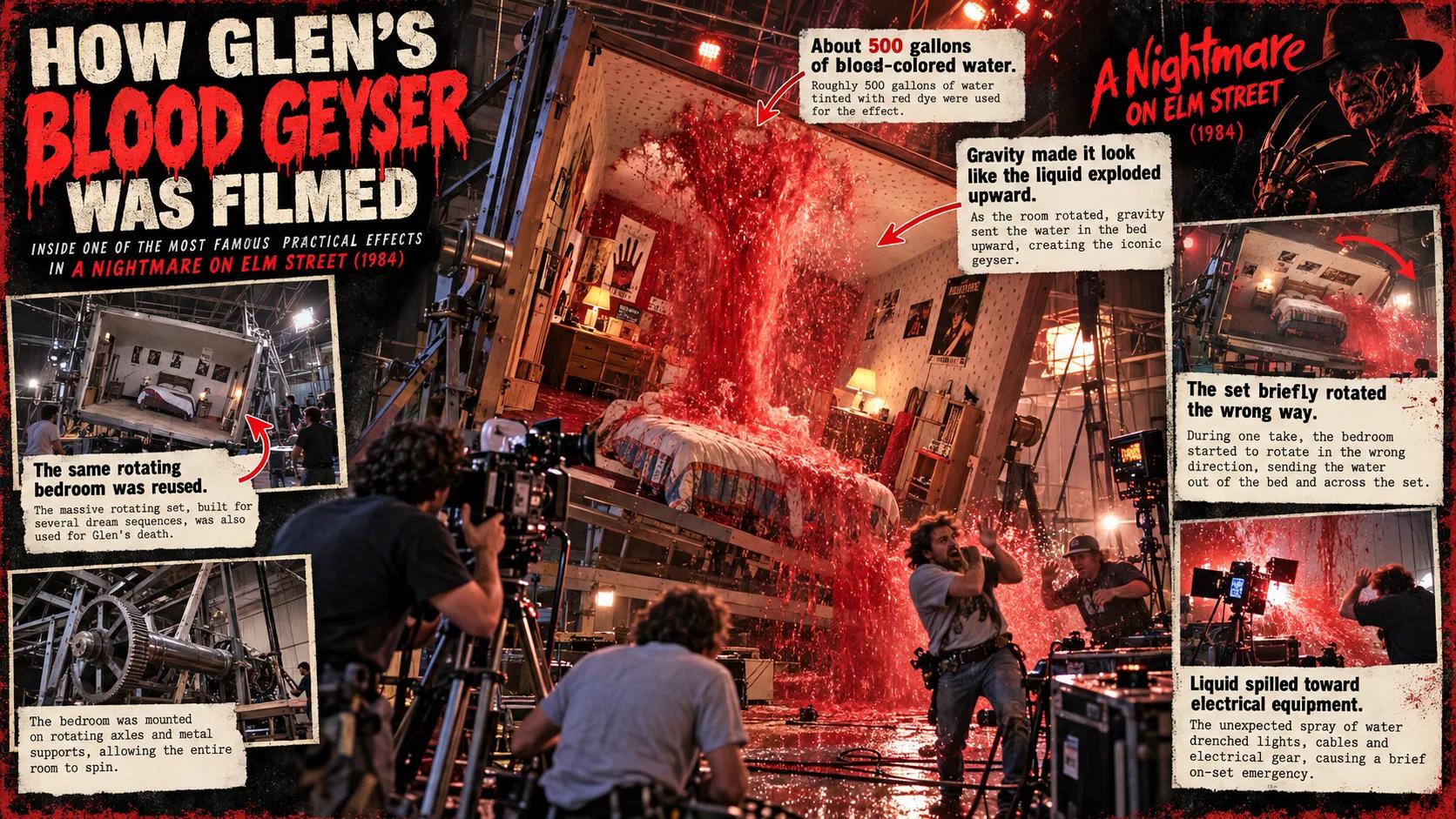
Glen's blood geyser reused that room — and the effect went dangerously wrong: The same rotating bedroom was repurposed for Glen's legendary death. The crew released roughly 500 gallons of blood-colored water while turning the set so gravity would make the liquid appear to explode upward from the bed. During filming, the structure rotated in the wrong direction and the enormous amount of liquid spilled toward electrical equipment, briefly turning an iconic horror effect into a genuine on-set emergency.
Detail 13
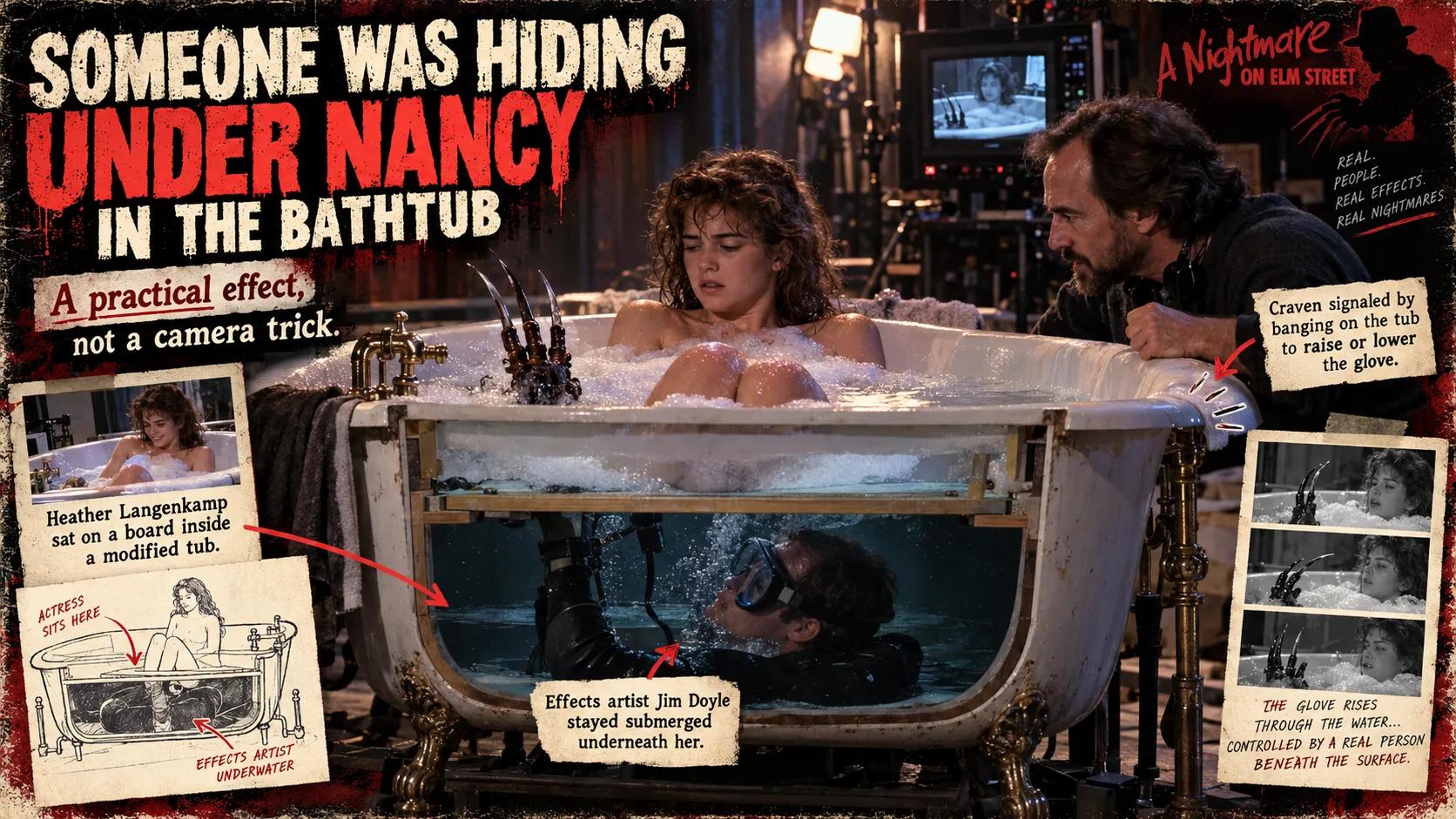
Someone was actually hiding underneath Nancy in the bathtub: Freddy's glove rising between Nancy's legs was accomplished with an ingenious practical setup. Heather Langenkamp sat on a board inside a modified bathtub while effects artist Jim Doyle remained submerged directly underneath her. Craven communicated with him by banging on the bathtub, telling Doyle when to raise or lower the glove even though he could not clearly see where he was placing the blades.
Detail 14
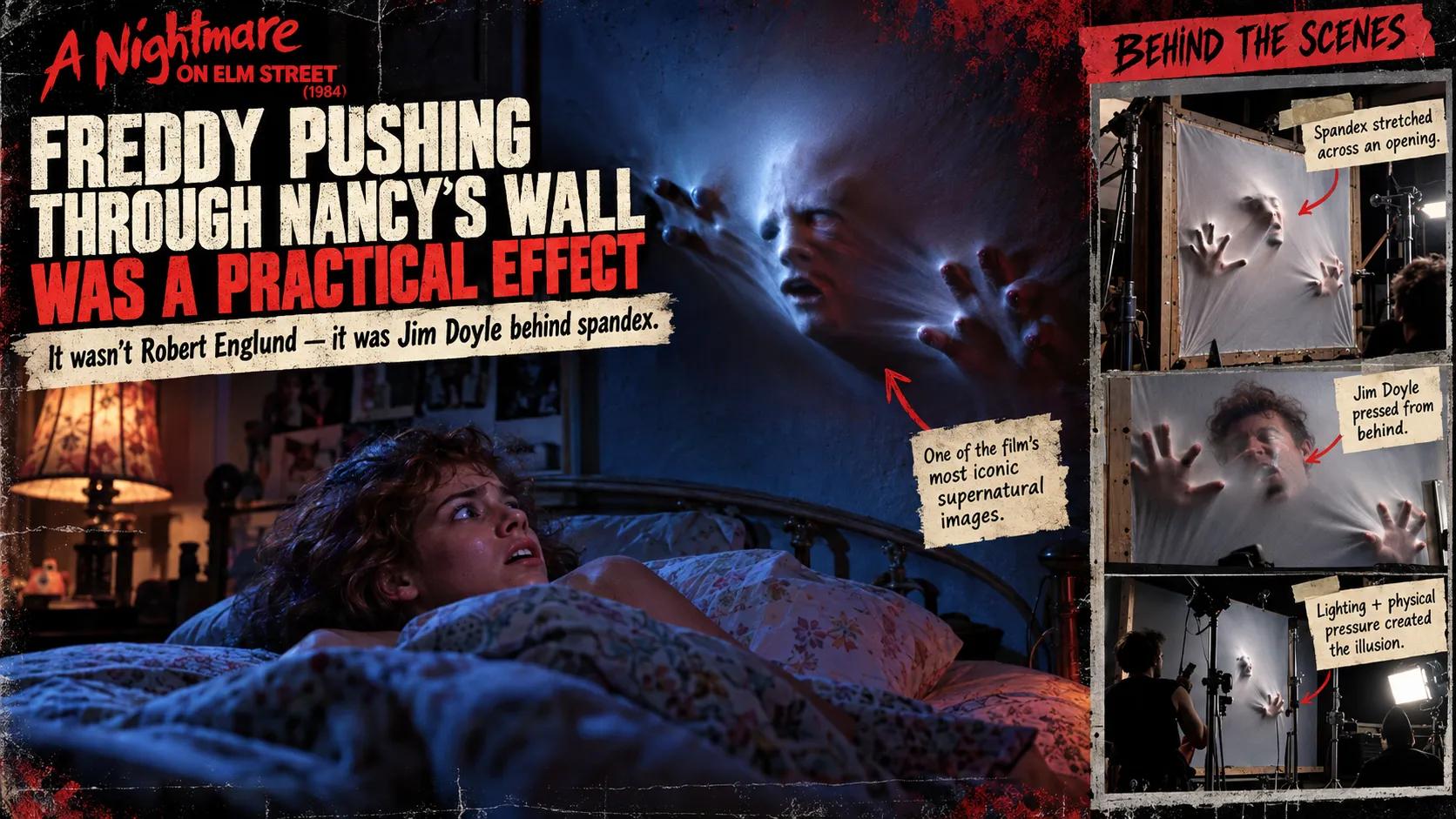
The Freddy pushing through Nancy's wall is not Robert Englund: The famous image of Freddy apparently materializing through the wall above Nancy's bed required almost no sophisticated technology. The crew stretched a sheet of spandex across an opening and had effects artist Jim Doyle press his face and hands against it from behind. Englund was not even performing the shot. Simple fabric, lighting, and physical pressure created one of the movie's most enduring supernatural images.
Detail 15
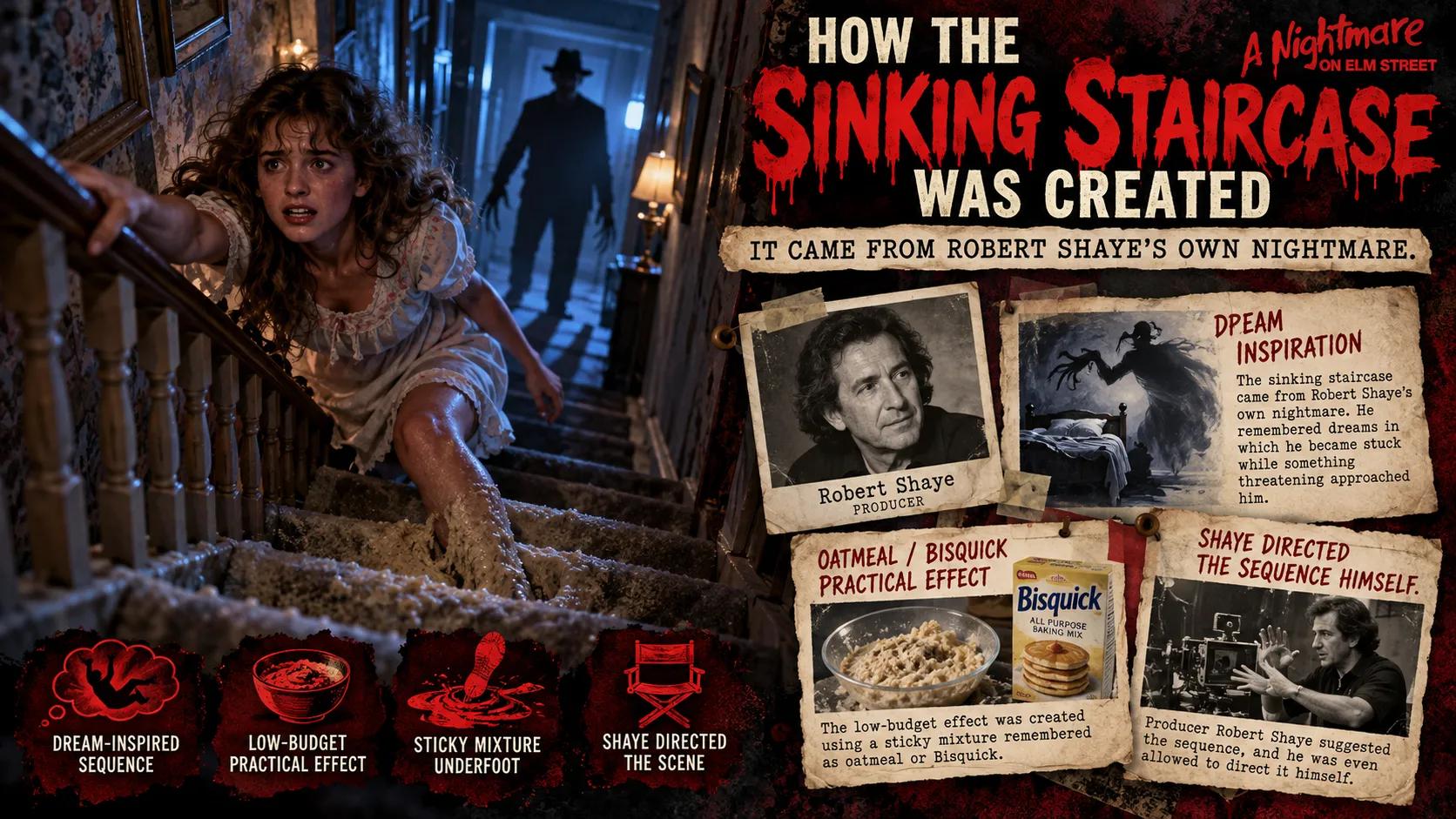
The sinking staircase came from Robert Shaye's own nightmare: Nancy's desperate escape becomes even more surreal when her feet sink into the staircase. Producer Robert Shaye suggested the sequence after remembering dreams in which he became stuck while something threatening approached him. The shoestring-budget effect was made using an inexpensive sticky mixture various crew members remembered as oatmeal or Bisquick. Shaye was even allowed to direct the sequence himself.